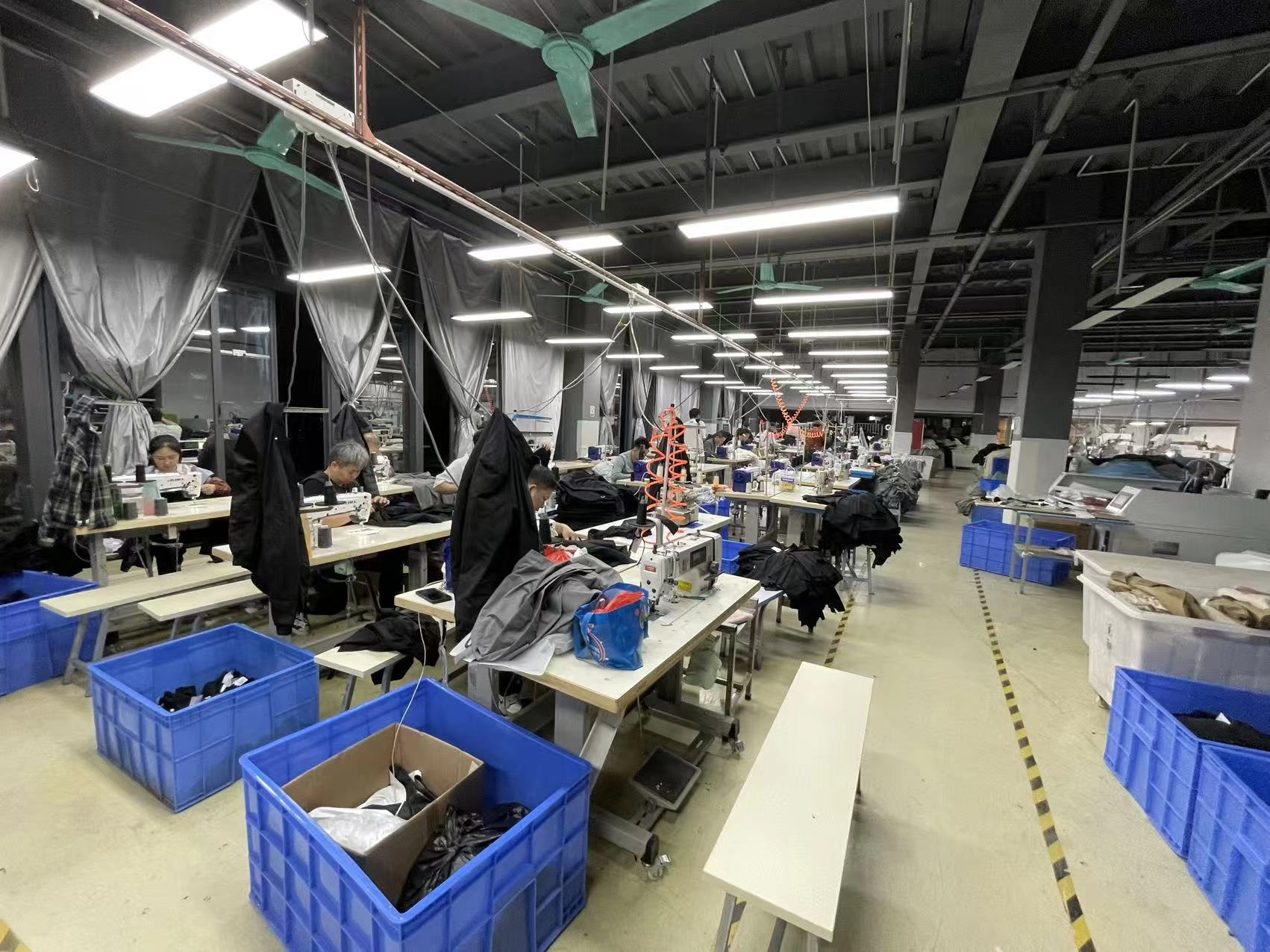
How to Plan Apparel Production Around Peak Season and Chinese New Year
Most late deliveries are not caused by a slow factory. They are caused by an order that arrived during a period when the factory's capacity was already committed, its workforce was travelling, or its fabric mill had stopped taking new bookings. The apparel sourcing year has a pronounced shape, and buyers who plan against that shape get their goods on time without paying for air freight. Buyers who plan against a wishful calendar do not.
On this page
- Why the calendar, not the factory, sets your delivery date
- The shape of the apparel sourcing year
- Chinese New Year: the longest stop in the calendar
- Peak season and how capacity tightens
- Reserving capacity, not just placing orders
- Building a realistic buffer
- A launch calendar you can copy
- Peak season checklist
- FAQ
Why the calendar, not the factory, sets your delivery date
A factory's stated production lead time — for most apparel orders, 2–4 weeks of bulk production — is measured from the moment production starts, not from the moment you send an enquiry. Between those two points sit sampling, approval, material booking and capacity scheduling, and it is in that gap that most delivery promises are quietly lost.
Three things make the gap unpredictable, and all three are calendar effects rather than factory shortcomings. Material lead time varies by season, because mills and trim suppliers get booked out ahead of the periods everyone else is also producing for. Capacity is finite and shared, so your order competes with every other order the factory has accepted for the same line and the same week. And labour availability is seasonal, because a large part of the apparel workforce travels home for the Spring Festival, and the ramp-down before and ramp-up after are both real. For the stage-by-stage version of each lead time and what compresses it, see our apparel lead time FAQ.
Plan from the shipping date backwards. Set the date you need goods in your warehouse, subtract freight transit, subtract bulk production, subtract sampling and approval, and then subtract a material booking window. What remains is the date your order needed to be confirmed. If that date has already passed, the honest answer is a later delivery or a faster shipping mode — and knowing this in week one is worth far more than discovering it in week six.
The shape of the apparel sourcing year
The year is not flat, and the busy periods are largely predictable. The table below describes the pattern from a Guangdong factory's point of view; exact dates shift year to year, but the rhythm does not.
| Period | What is happening | What it means for your order |
|---|---|---|
| Mid-February to April | Factories return from the Spring Festival and work through the backlog that built up before it | Expect a slow first two weeks and a congested month after; book early and confirm the restart date |
| May to July | Autumn and winter production runs alongside a steady flow of replenishment orders | Generally the most predictable booking window of the year |
| August to October | Peak season; holiday and winter programmes are being produced and shipped at once | Capacity tightens, sampling slots get scarce and freight rates rise |
| November to mid-January | Late orders, year-end completion and early spring production, followed by a pre-holiday push | Prices on freight rise; anything not shipped before the holiday waits for weeks |
| Late January to mid-February | The Spring Festival period: workforce travels, production largely stops | Treat this window as closed; plan production either side of it |
The two windows that cause the most damage are the weeks immediately before the Spring Festival and the weeks immediately after it. Before, factories push to finish and ship what they can, which means new orders get quoted with cautious dates. After, everyone's backlog lands at once, and the factory has to work through it before your order reaches the line.
Confirm the restart date in writing. Factories sometimes restart with a partial workforce, and a line that is nominally open may run at reduced output for a week or two. Ask when the full complement returns, not only when the factory reopens.
Chinese New Year: the longest stop in the calendar
The Spring Festival, which falls between late January and mid-February, is the single largest disruption in the apparel sourcing year. It is not a public holiday in the Western sense, where business resumes the next working day. It is a migration: a large share of the manufacturing workforce returns to their home provinces, and for many the return trip is the only one they make all year.
Four effects follow, and each needs to be planned for separately.
- Recruitment after the holiday — not everyone comes back, and replacements need training, so output after the restart climbs rather than jumps
- Material bookings stop earlier than production does — mills and trim suppliers close on their own schedules, and a fabric that is not booked before their cut-off will not be there in February
- Freight capacity tightens before the holiday — everyone tries to ship in the same three weeks, so rates rise and space is booked out early
- Cash flow moves earlier — deposits on holiday-adjacent orders are typically requested sooner, because suppliers are funding materials before the shutdown
The practical planning rule is to treat the 4–6 weeks around the festival as unavailable, and to decide in October or November whether your spring stock will be produced before it or after it. Orders placed in the run-up and confirmed for the other side of the holiday are perfectly viable; orders that assume the factory will simply catch up afterwards rarely are.
Peak season and how capacity tightens
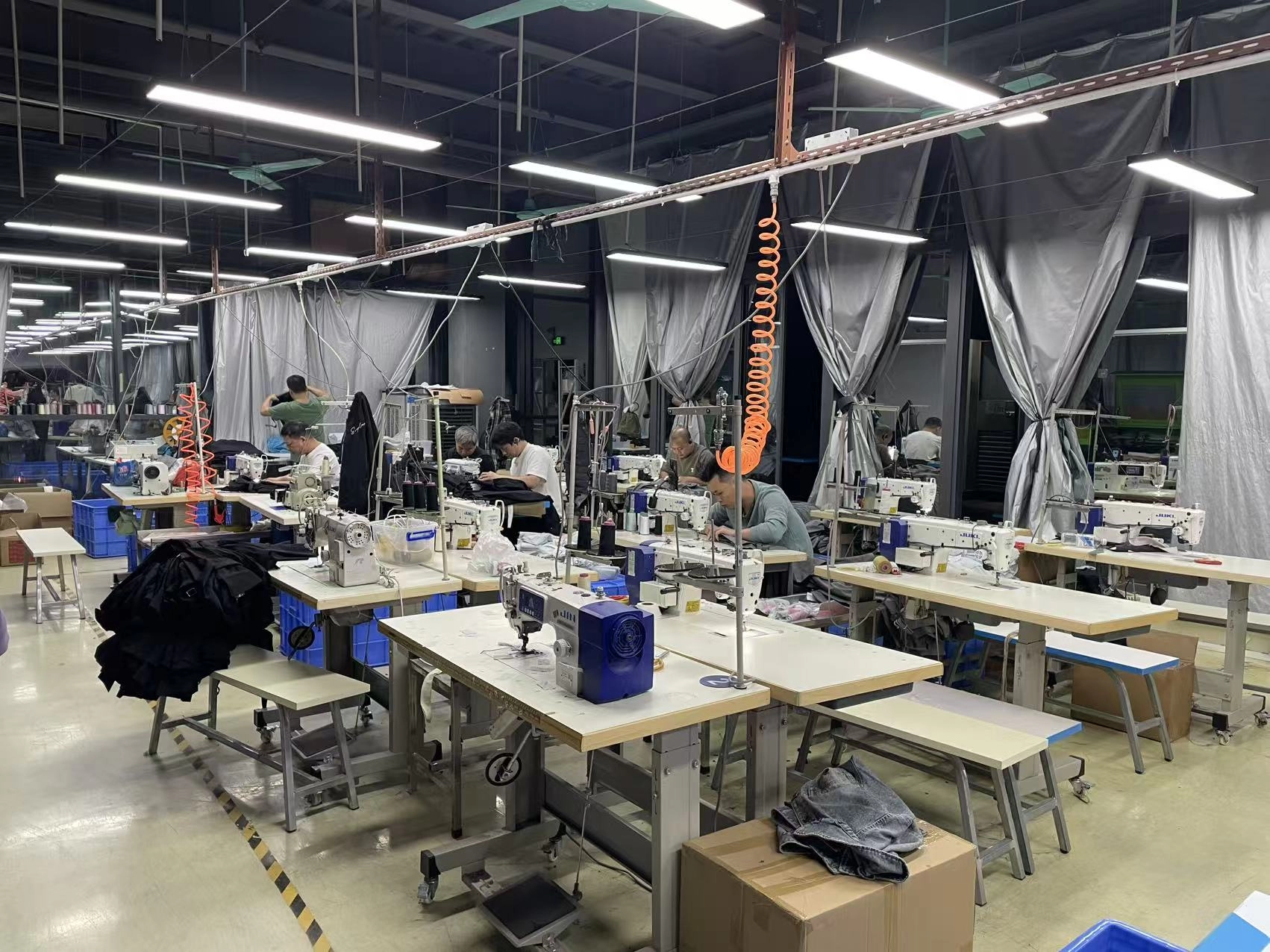
Peak season is less dramatic than the festival but affects far more orders, because it lasts months rather than weeks. Two things tighten at the same time: the factory's production slots and the logistics network's capacity.
On the factory side, the first thing to go is sampling availability. Development lines get committed to production support, and a counter-sample that takes 3–7 days in a quiet month can take considerably longer in September. The second thing to go is flexibility on quantity — a small pilot batch that a factory would happily slot in during a quiet period may not be economic to interrupt a line for at peak. The third is the willingness to accept a delivery date you choose rather than the one the production plan has space for.
On the logistics side, rates rise and space becomes the constraint rather than price. Booking a sailing a week before it departs costs more than booking three weeks ahead, and at the peak of the season the space may not exist at any price. Because apparel is bulky and light, it is among the first cargo to be squeezed out when space is tight.
Two dates do the work. Fix the date your order must be confirmed and the week it must ship, and hold both. Everything between them — sampling, approval, material booking, production — can be recovered if those two dates are protected, and almost nothing can be recovered if they slip.
Reserving capacity, not just placing orders
A purchase order tells a factory what to make. It does not, on its own, tell the planning team to hold a line for you in a particular week. In a quiet month the distinction is academic; in a peak month it is the difference between your delivery date and someone else's.
Three mechanisms are worth using, and they cost far less than air freight.
- Named production weeks — ask the confirmation to state the week production starts and the week it ships, not only the total lead time
- Material booking confirmation — ask for written confirmation that the fabric and trims are booked, with the mill's own lead time stated, before you consider the schedule firm
- Sampling slots — book the counter-sample slot at the same time as the order discussion, because development capacity is the first thing to disappear in a busy period
A fourth mechanism is available to established buyers: forecasting. Telling a factory in advance roughly how many units you expect across a season lets them buy fabric ahead of the order, which shortens both material lead time and production lead time. You are not committing to a quantity, only to an intention, and the difference in responsiveness is substantial.
Building a realistic buffer
Buffers are usually applied in the wrong place. Buyers add two weeks to the factory lead time and nothing to anything else, which protects against exactly one of the risks they face. A buffer should be built into four separate stages, each sized against the risk that actually applies to it.
| Stage | What can stretch it | Where to add buffer |
|---|---|---|
| Sampling and approval | Fabric availability, fit corrections, decoration trials | Add a full sample round rather than days; 2–3 rounds is normal for a new style |
| Material booking | Mill lead times, minimum purchases, colour matching | Add weeks rather than days, and confirm booking in writing |
| Bulk production | Line loading, labour availability, rework | Add days, and more in peak season |
| Shipping and clearance | Space availability, port congestion, customs queries | Add a week for sea freight in peak season; add more around the festival |
Sizing the sampling buffer is the one buyers most often get wrong. Because fit corrections are iterative, the risk is not that a sample takes a few days longer; it is that a second or third round is needed at all. Planning for the rounds is more realistic than planning for a faster round.
A launch calendar you can copy
Work backwards from the retail date, and write the plan as a sequence of decisions rather than a sequence of tasks.
- Set the retail date. The day the goods must be on sale, not the day they must arrive.
- Subtract the logistics leg. Sea, air or rail, plus clearance and onward delivery, with a peak-season allowance.
- Subtract bulk production. Two to four weeks for most styles, plus a peak-season allowance.
- Subtract material booking. Whatever the mill and trim suppliers need, confirmed in writing.
- Subtract sampling and approval. Two to three rounds, plus shipping time for the sample itself.
- Mark the festival window. If any of the above lands inside it, move the whole plan to one side of it.
- Fix the confirmation date. The day the order and the specification must both be final.
- Fix the shipping week. Book freight against it, and treat it as immovable.
If step seven has already passed, do not compress the plan silently. Either accept a later retail date, pay for a faster shipping mode, or reduce the range so the quantity fits the capacity that remains. Deciding this at the start is a commercial judgement; deciding it three weeks before the sailing is a fire.
Peak season checklist
- Retail date, shipping week and order confirmation date all fixed in writing.
- Festival window identified and the whole plan placed on one side of it.
- Factory's full-restart date confirmed, not only its reopening date.
- Counter-sample slot booked at the same time as the order discussion.
- Material booking confirmed in writing, with the mill's own lead time stated.
- Two to three sample rounds allowed for new styles rather than one fast round.
- Freight booked weeks ahead rather than days, with space confirmed.
- Buffer applied at all four stages, not only to bulk production.
- Peak-season allowance built into both production and shipping estimates.
- Fallback decided in advance: later date, faster mode, or a narrower range.
FAQ
How early should I place an order for delivery before a peak period?
Work backwards from the date you need the goods rather than forwards from today. Sampling and approval, material booking, bulk production and shipping each take their own time, and in peak season each of them takes longer. As a working rule, the orders that arrive on schedule are the ones confirmed before the capacity for that period was fully booked — which means starting the conversation a season ahead, not a month ahead.
Can production continue through Chinese New Year?
Most apparel production does not, because the workforce travels home. A factory may keep a skeleton team for finishing, packing or samples, but the reliable assumption is that the period around the festival is unavailable for new production. Confirm your factory's specific dates each year, since they vary, and plan to be finished before the holiday or to start after it.
What is the sample lead time, and does it change in peak season?
For most styles a counter-sample takes 3–7 days depending on complexity and material availability. In peak season the constraint is not the work but the development line's availability, because sampling competes with production support. Booking the sample slot early is more effective than asking for it urgently later.
Is air freight the right answer when a date is at risk?
It is the right answer when the retail date genuinely cannot move and the margin on the affected styles can absorb the premium. It is the wrong answer as a habit, because a programme that relies on air freight every season has a planning problem that freight is only disguising. Use it as a rescue, not as a calendar.
How do I hold a factory to a production week?
Ask for the production start week and the shipping week to be stated in the order confirmation, alongside the total lead time. Ask for written confirmation that materials are booked against that schedule. A total lead time on its own tells you nothing about when your order sits in the factory's plan, and it is the plan, not the arithmetic, that determines when your goods ship.
Plan the order before the season books out.
Apparel Manufacturing runs a full-category apparel supply chain from Dongguan, Guangdong, producing men's, women's, kids' and activewear with OEM/ODM support from design through delivery. Tell us your retail date and destination market, and our team will work back through sampling, material booking, production and shipping to give you a confirmation date you can plan around.
Email Apparel [email protected] or reach the sales desk on +44 7892864589. More sourcing guidance sits in our apparel buying guides.


